Discovery
One 60-minute call, then a written page list, a keyword list per page and a technical inventory of whatever exists today.
WEBSITE DEVELOPMENT
Static, WordPress or React — chosen by what the site has to do. Structured for search from the first wireframe, shipped in weeks, handed over in your name.
A theme that ships forty plugins to render one page
Every plugin is a request, an update and a security surface. The page loads slowly and nobody can say which part is at fault.
Headings chosen for how they look, not what they mean
Five H1s on one page and no H2 under them. A crawler reads an outline with nothing in it.
A launch with no redirect map
The old URLs 404 on the day of the switch and the rankings the site already had are gone within a fortnight.
One 60-minute call, then a written page list, a keyword list per page and a technical inventory of whatever exists today.
Layouts drawn against the real copy, not lorem. Mobile first, reviewed on a staging URL you can comment on directly.
Semantic markup, one H1 per page, real internal links, images sized and compressed, forms that submit somewhere you can read.
Redirects mapped, Search Console verified, analytics live and schema validated before the DNS switch, not after it.
Three live builds. Open any of them and read the page structure — that is the part that decides whether it ranks.
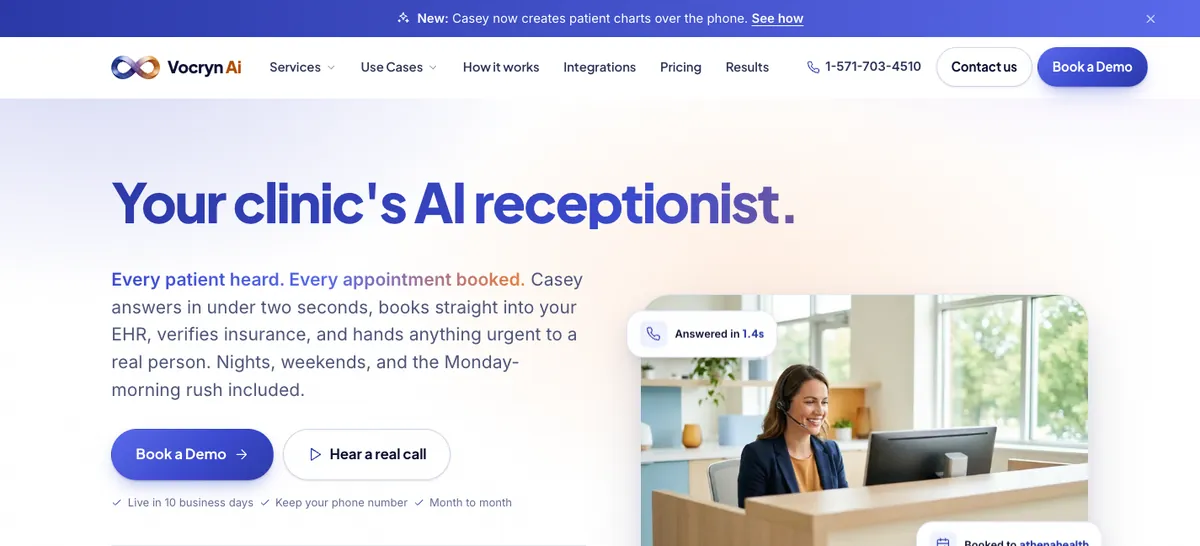
The product site for our own AI receptionist — an appointment-booking voice agent for dental and primary care clinics, with the integrations and pricing laid out on one page.
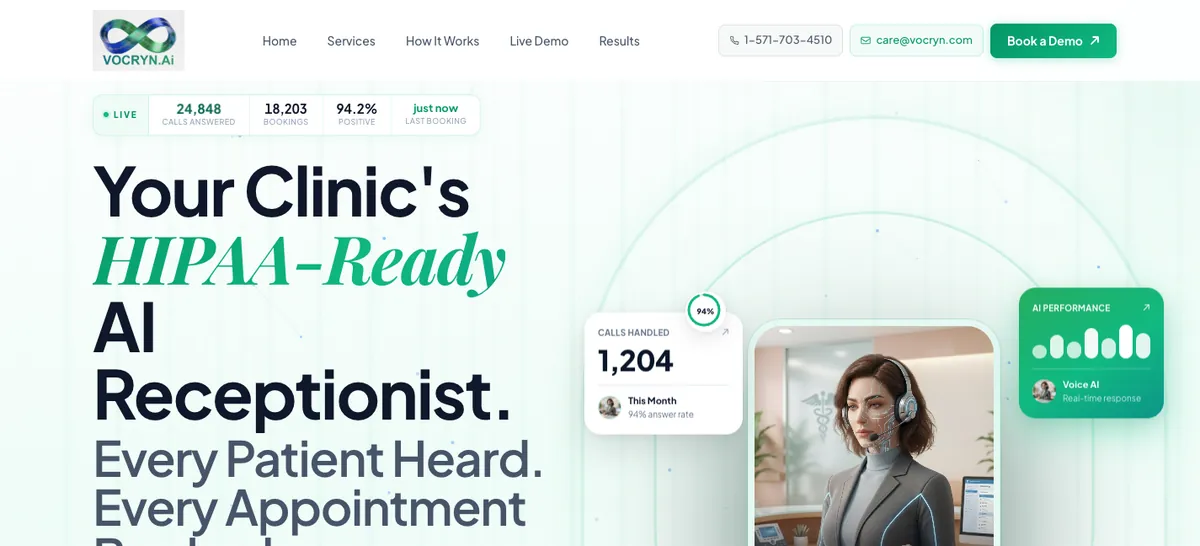
A HIPAA-ready AI front desk for clinics. The hero carries a live call demo and the booking flow writes straight into eClinicalWorks.
AI voice agents, chatbots and workflow automation for service businesses, with an embedded demo reel and a chat agent running on the page itself.
One H1 per page, heading levels that never skip, descriptive internal links and a sitemap that lists every URL you want indexed.
Images compressed and sized, fonts preloaded with a real fallback, no render-blocking third-party script added without a reason.
Both live before launch, both in your account, with goals configured against the enquiry — not against a pageview.
Written before the switch, tested after it, checked again a week later against the crawl errors report.
Visible focus, real labels, contrast that passes on the colours we actually shipped, and a skip link that goes somewhere.
Domain, hosting, repository and analytics, all owned by you, with the credentials and a short written runbook.
By what the site has to do. Marketing pages that change monthly go static. A site your team edits daily goes WordPress. An application behind a login goes React. We tell you which before the quote, and why.
Yes. Every build ships with an editing route that matches the stack, and a short written runbook for the three things you will change most often.
We write the structure and can draft the copy. What we will not do is publish invented claims about your business — anything factual comes from you or gets marked before it ships.
They are mapped before anything moves. Every existing URL either survives or gets a redirect, and we watch the crawl errors report for a month after the switch.
A URL and two sentences is enough. You get back a scope, a price and a start date — usually within two working days.